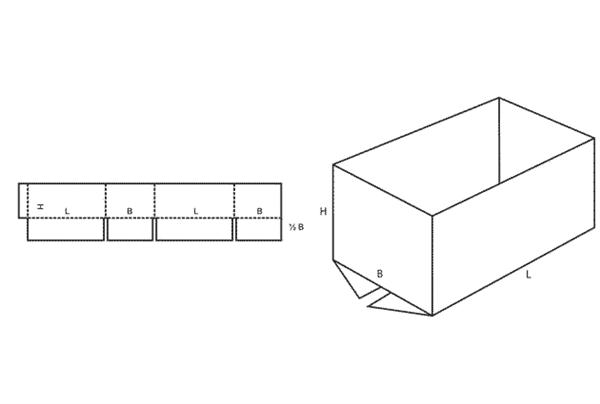
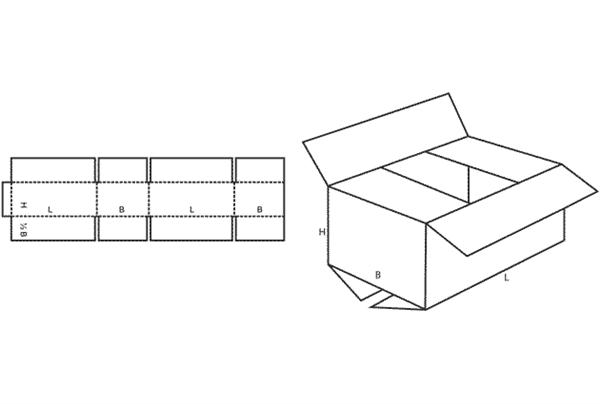
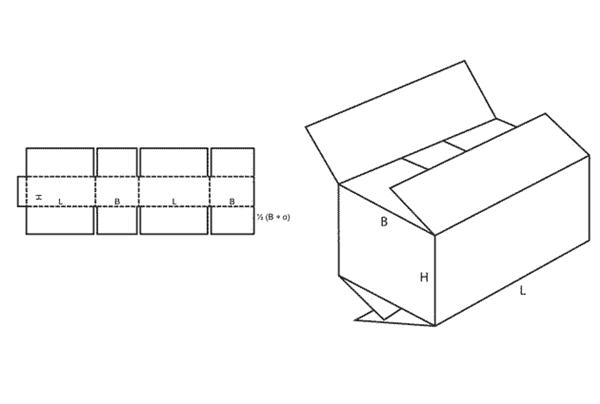
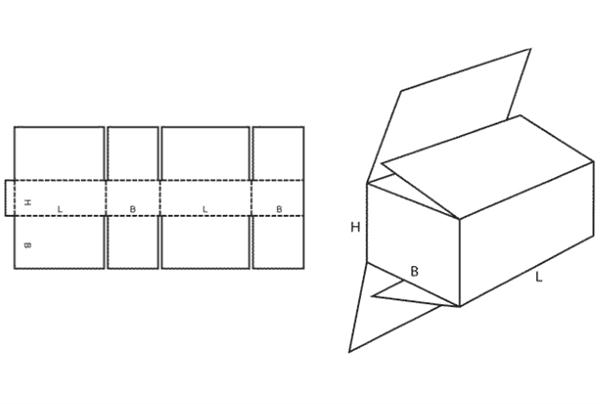
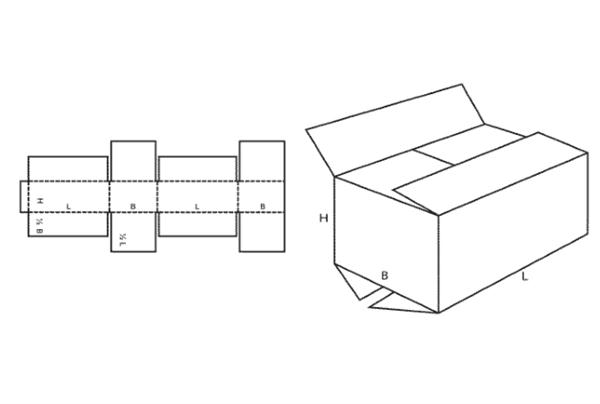
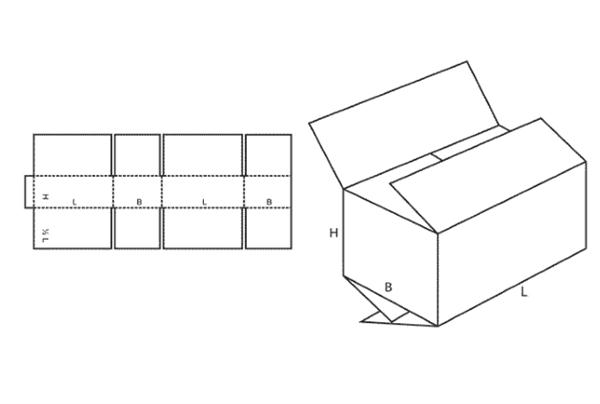
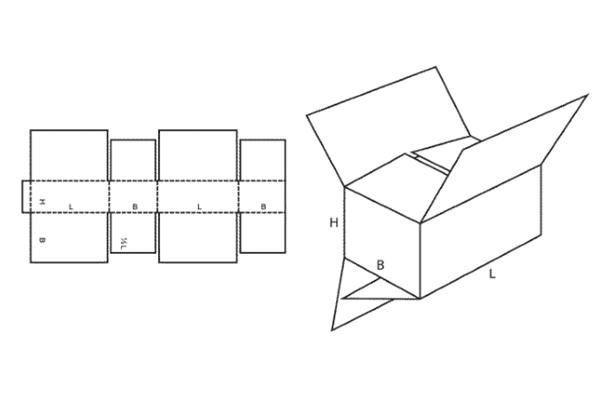
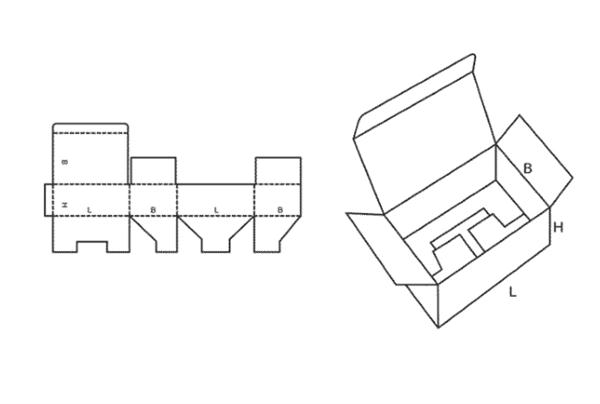
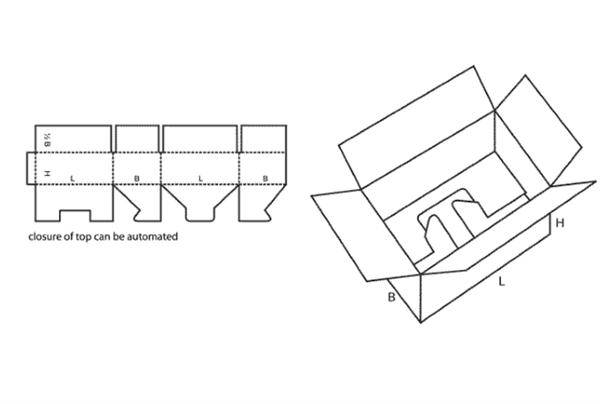
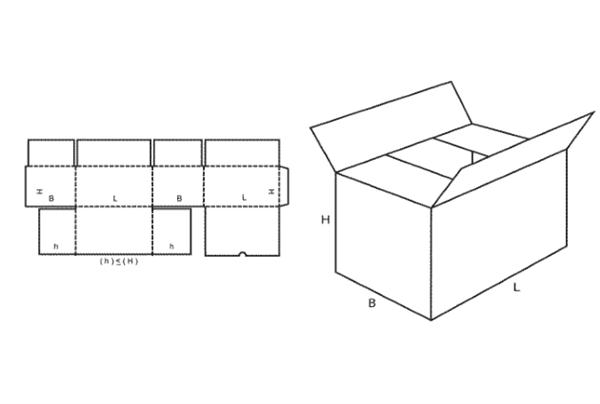
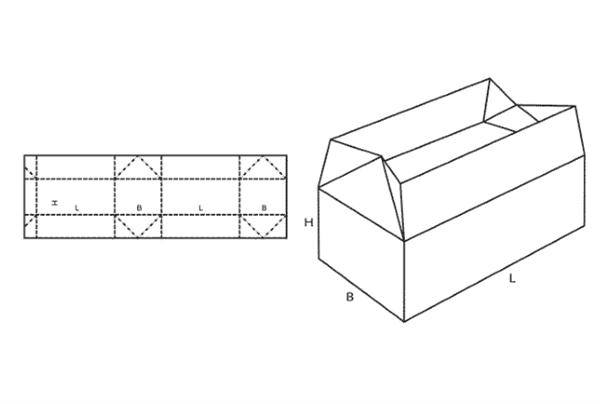
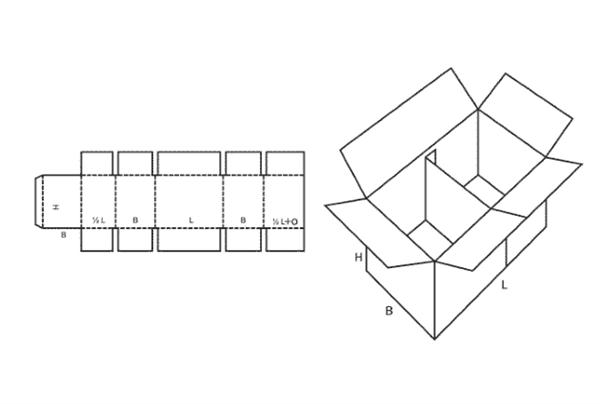
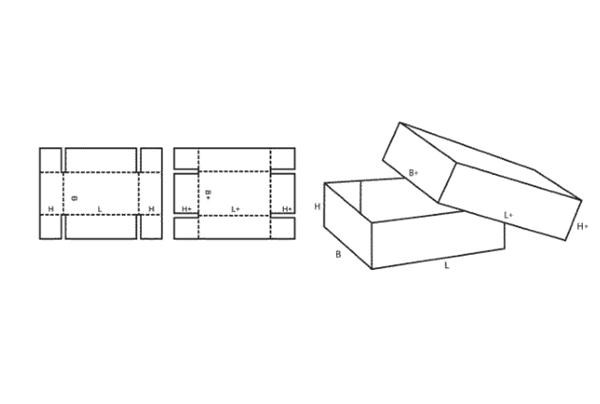
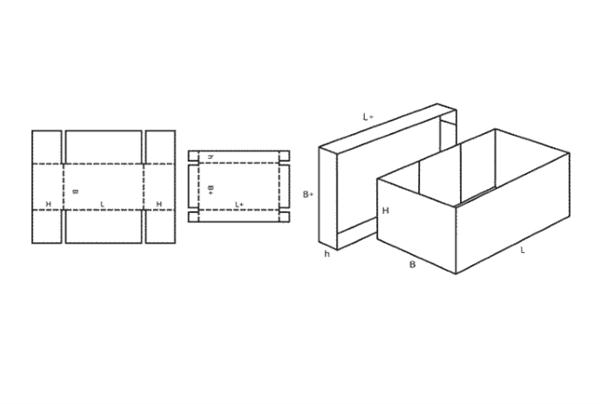
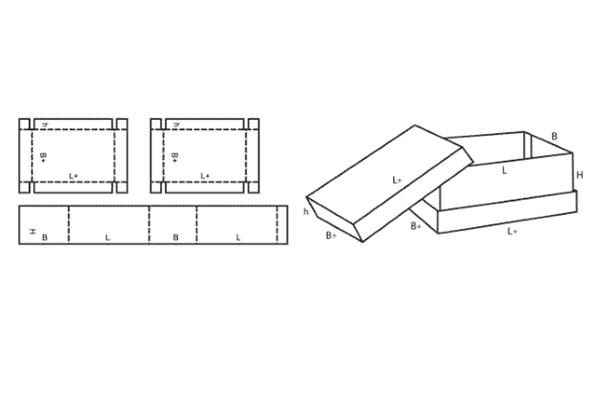
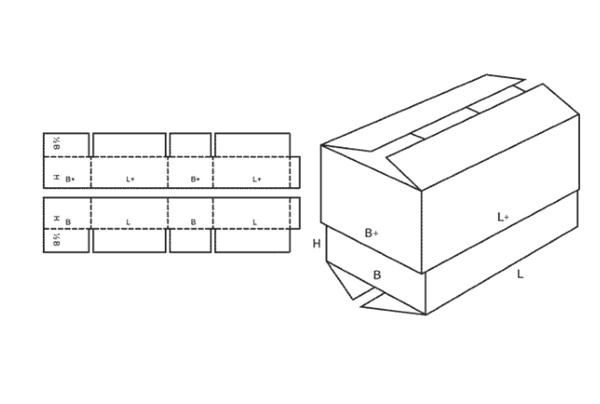
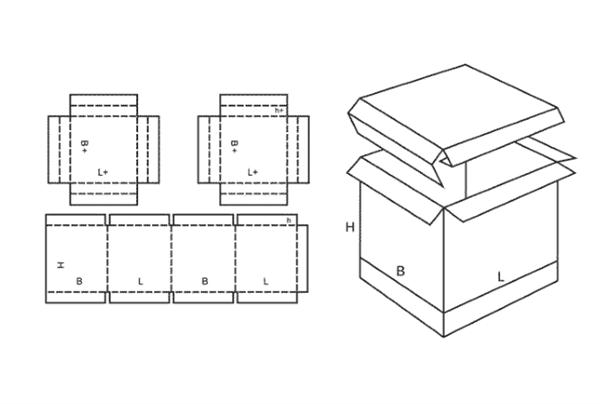
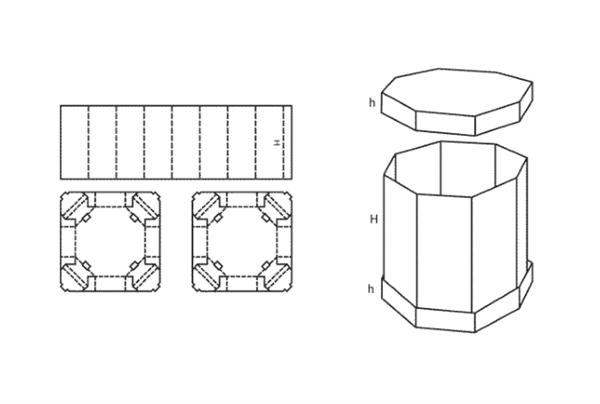
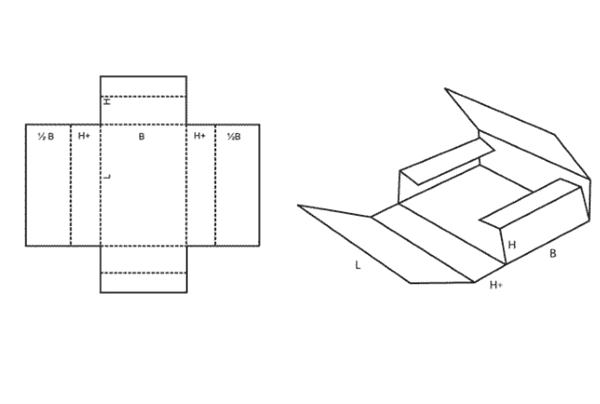
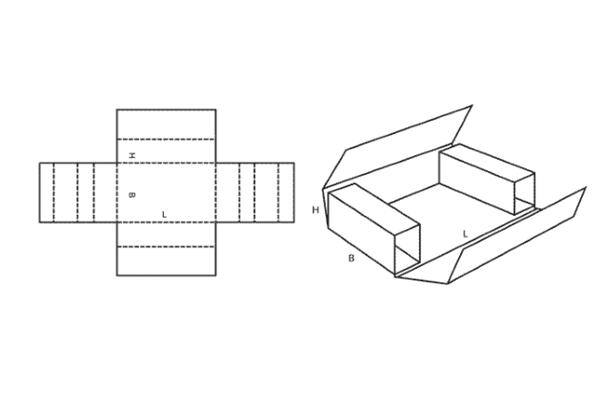
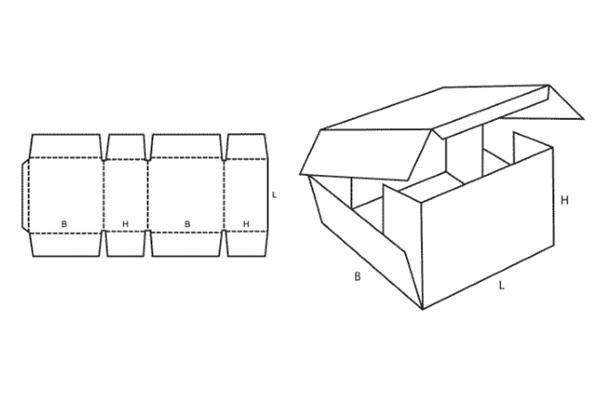
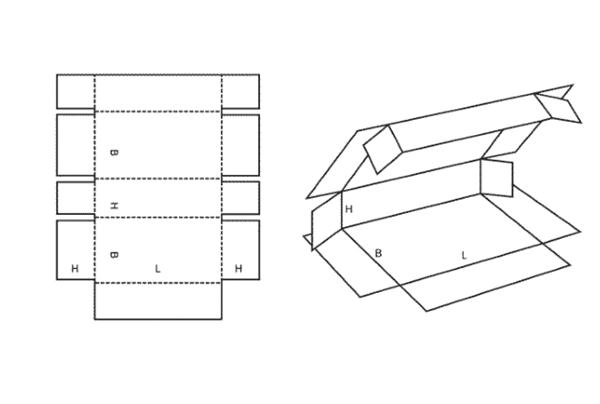
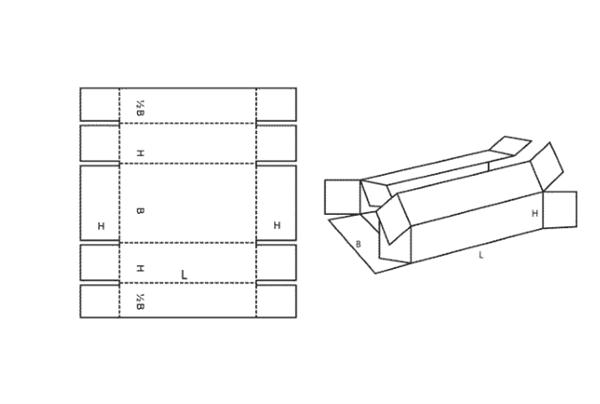
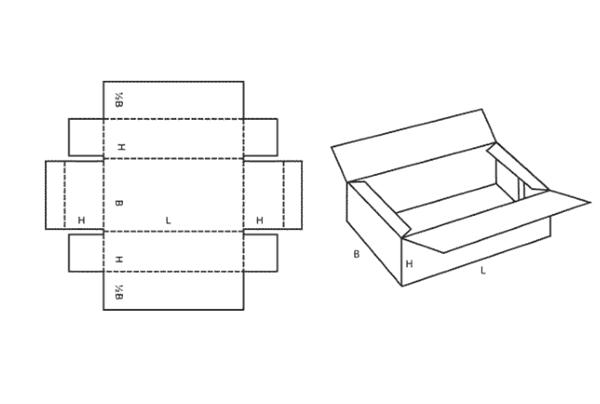
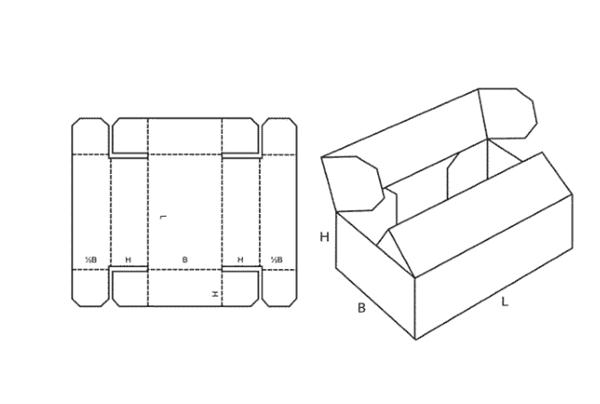
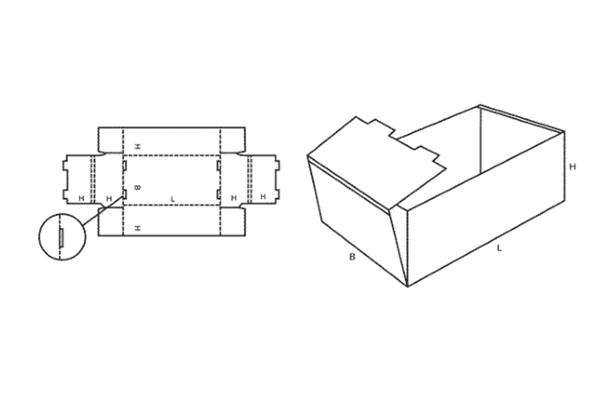
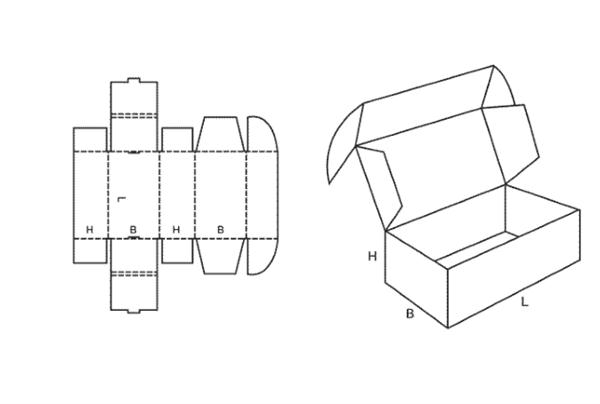
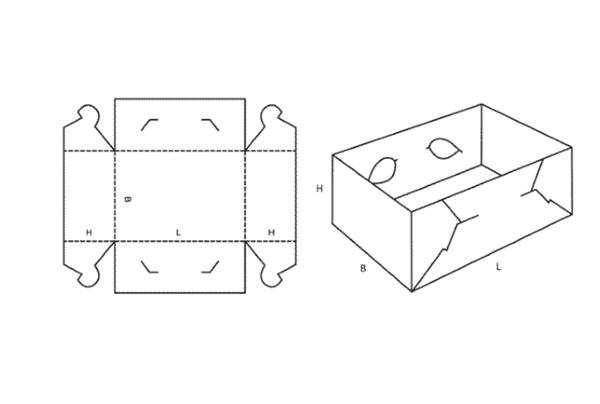
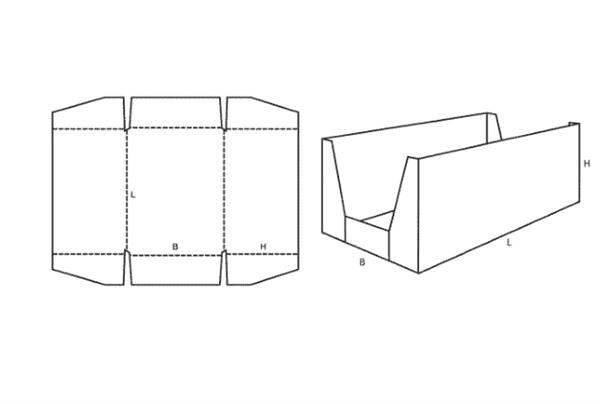
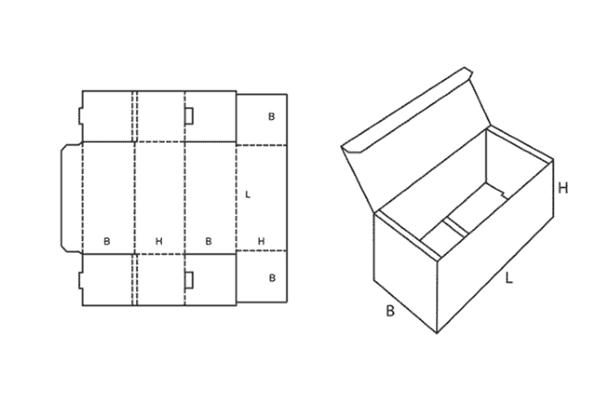
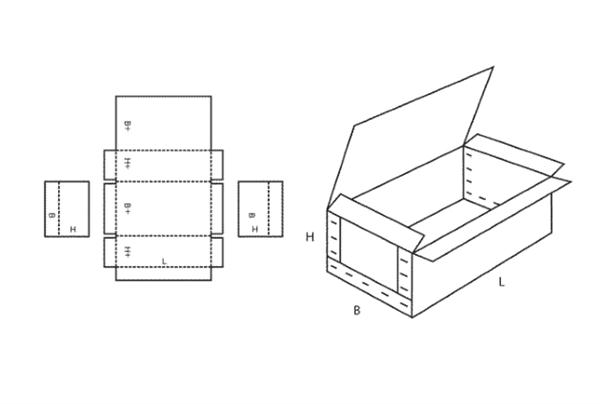
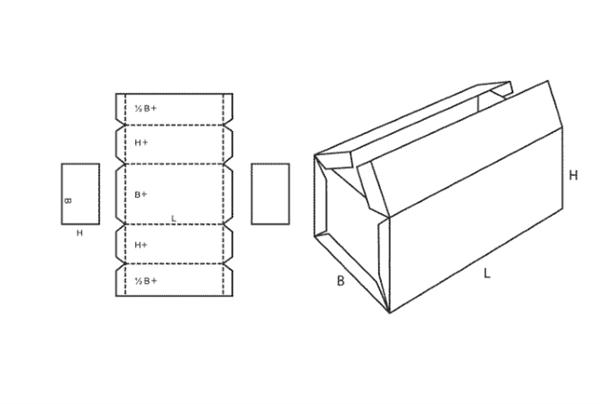
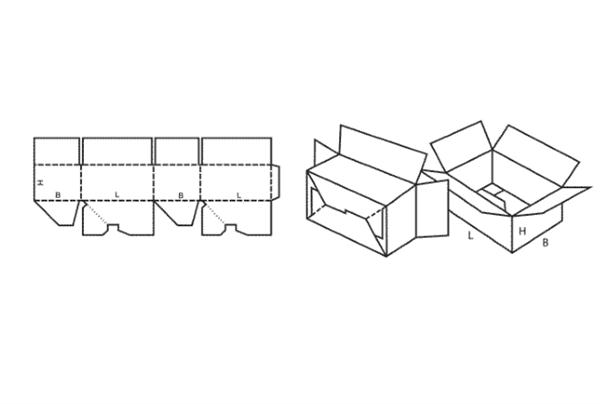
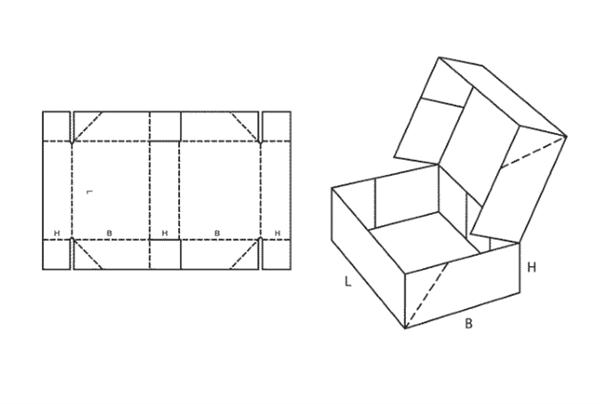
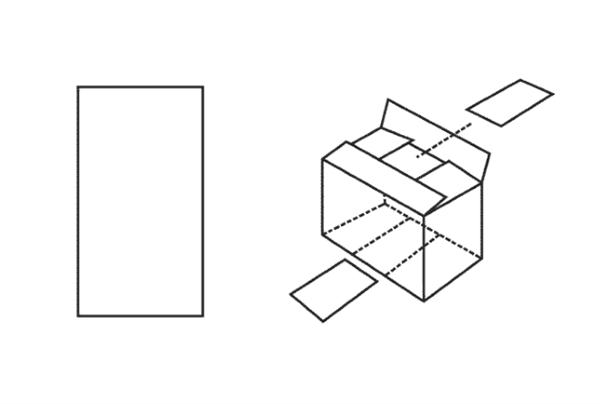
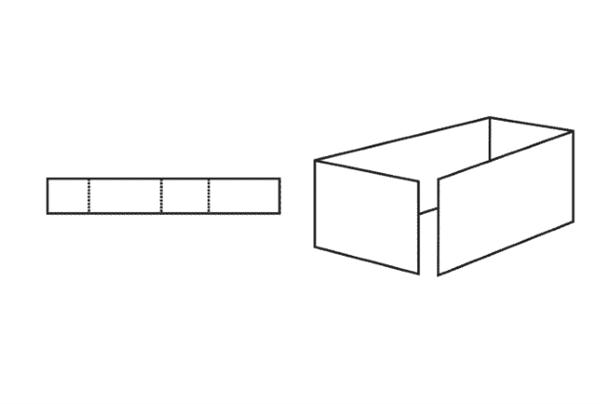
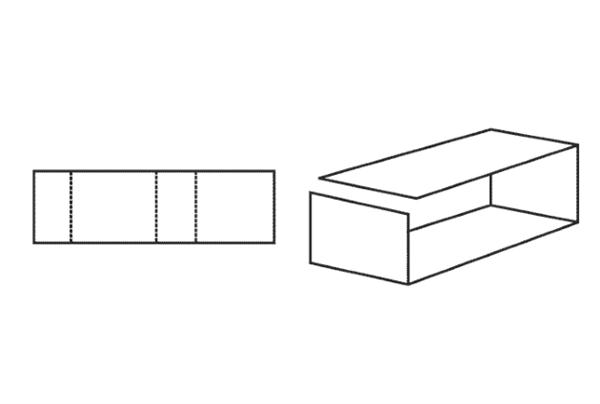
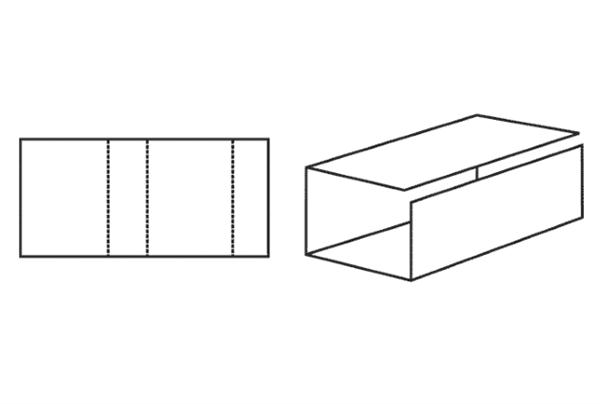
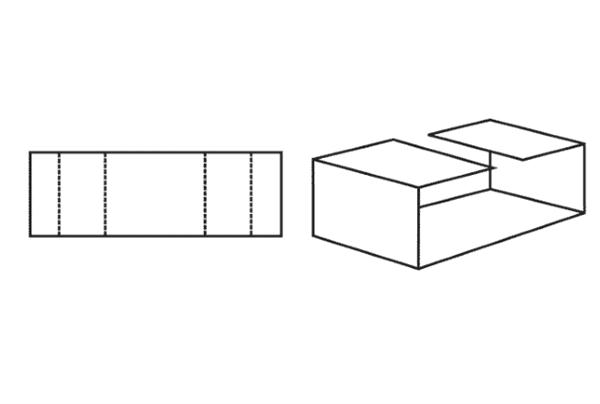
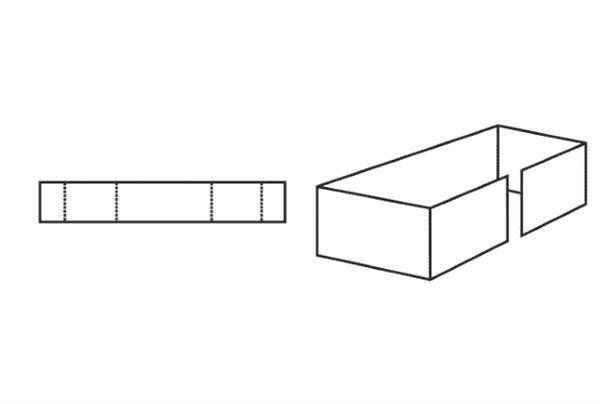
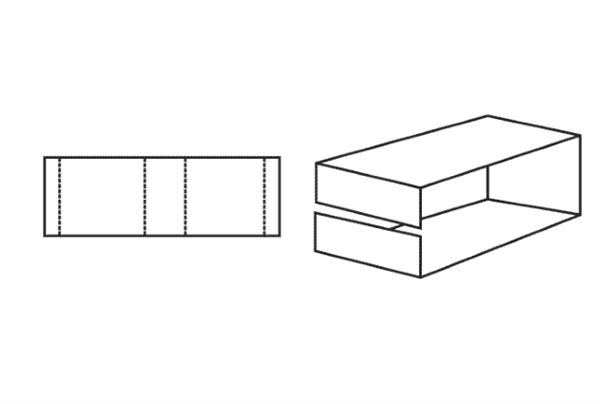
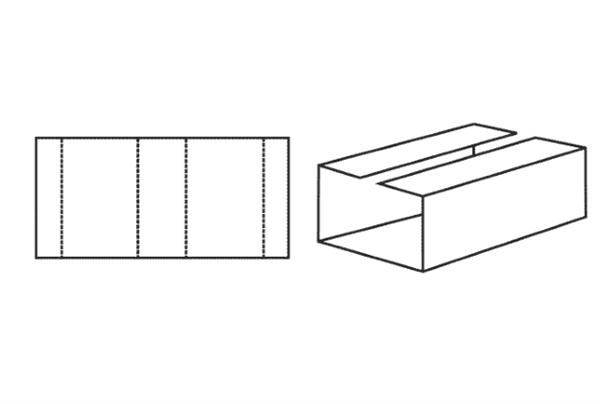
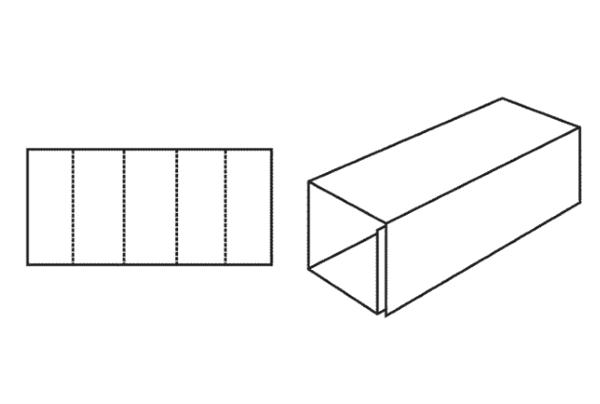
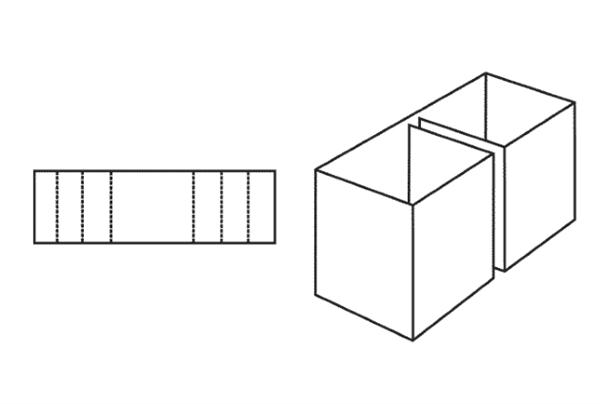
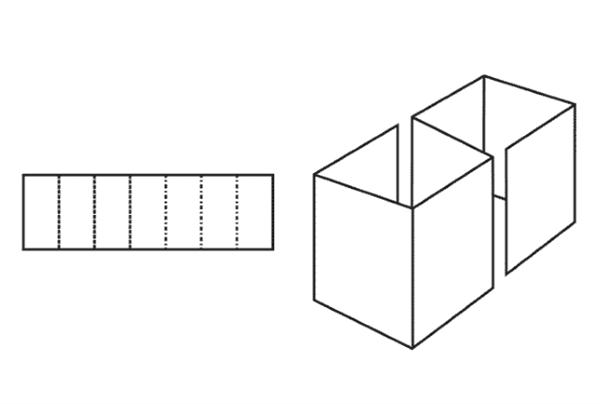
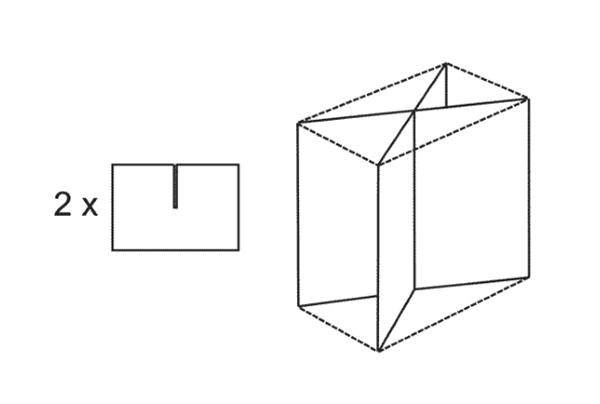
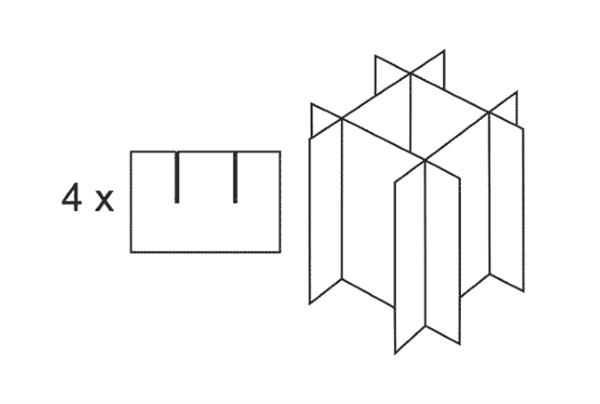
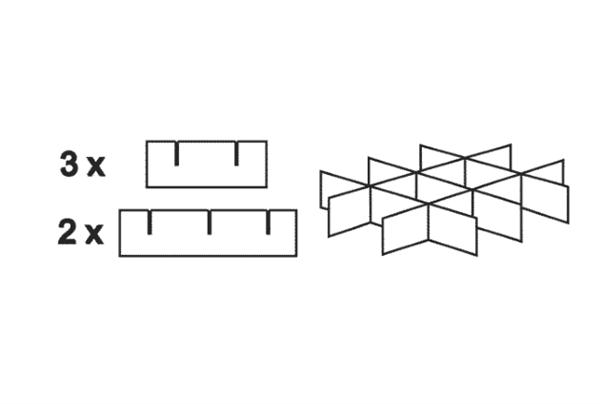
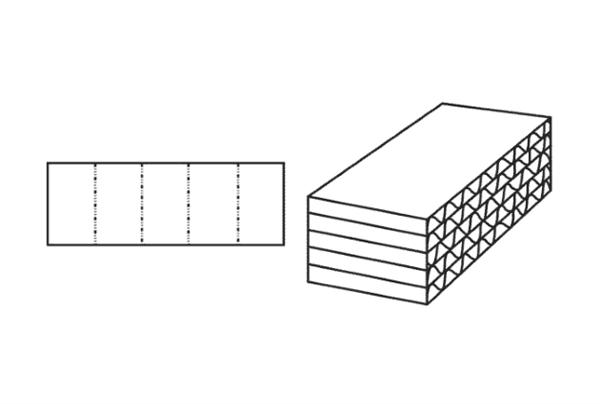
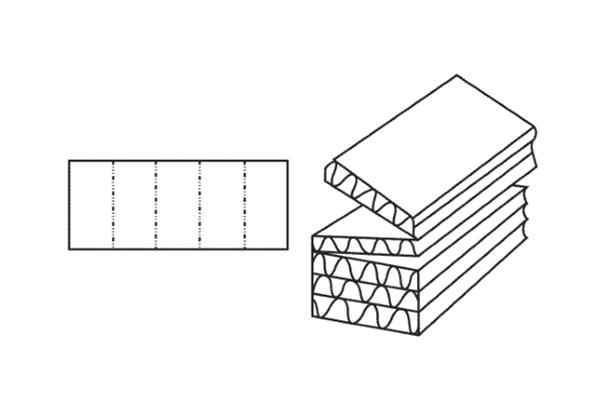
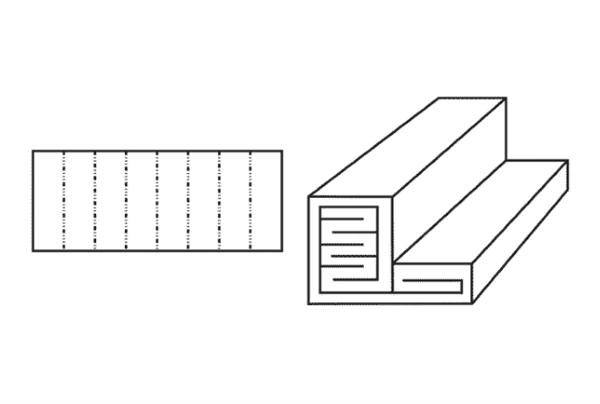
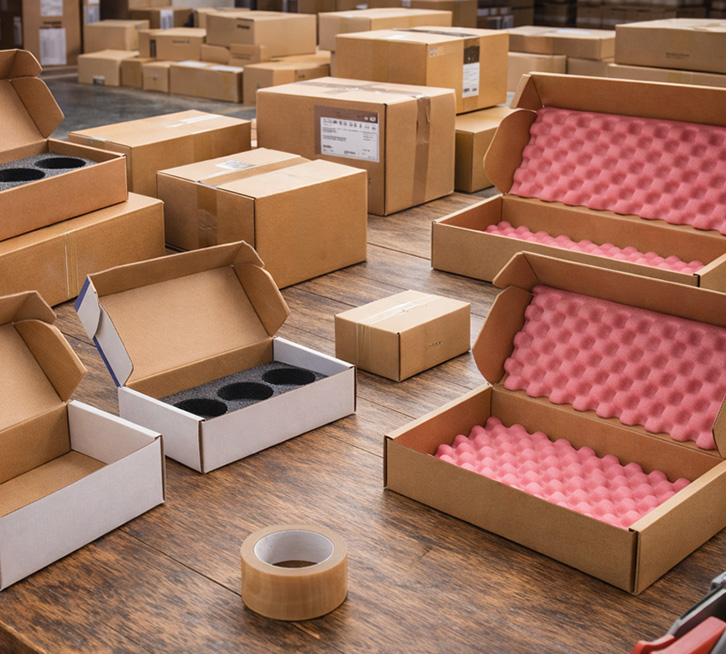
Each of the adjacent codes indicates a specific type of folding used on your corrugated box shell.
Different folds yield different benefits, and meet different packaging needs, i.e. bulge resistance, tensile strength, humidity control.
Customized protective inner packaging may be placed within the shell to stop your product from being damaged during transit.
Slotted Boxes: International Fibreboard Case Code: 02 Series
Slotted box styles are generally made from one piece of corrugated or solid fiberboard. The blank is scored and slotted to permit folding. The box manufacturer forms a joint at the point where one side panel and one end panel are brought together. Boxes are then shipped flat to the user. When the box is needed, the box user squares up the boxes, inserts products, and closes the flaps. The International Fibreboard Case Code refers to these styles as Slotted-Type Boxes, while the carrier classifications call them Conventional Slotted Boxes.
Half Slotted Container (HSC) - 0200
Regular Slotted Container (RSC) - 0201
Overlap Slotted Container (OSC) - 0202
Full Overlap Slotted Container (FOL) - 0203
Center Special Slotted Container (CSSC) - 0204
Center Special Overlap Slotted Container (CSO) - 0205
Center Special Full Overlap Slotted Container (SFF) - 0206
Telescope Boxes: International Fibreboard Case Code: 03 Series
Telescope boxes usually consist of a separate top, or top and bottom that fit over each other or a separate body. The International Fibreboard Case Code calls these boxes Telescope-Style. The truck and rail classifications call them Telescope Boxesif the cover extends over at least two-thirds of the depth, and Boxes with Coversif the cover extends over less than two-thirds of the depth.
Full Telescope Design (FTD) - 0301
Design Style Container (DSC) - 0306
Double Cover Container (DC) - 0310
Full Telescope Half Slotted Container (FTHS) - 0320
Folders: International Fibreboard Case Code: 04 Series
For folders, one or more pieces of the combined board provide an unbroken bottom surface and are scored to fold around a product. The International Fibreboard Case Code describes them as Folder-Type Boxes. The carrier classifications use the term Folders.
Rigid Boxes (Bliss Boxes): International Fibreboard Case Code: 06 Series
The three pieces of a rigid box style include two identical end panels and a body that folds to form the two side panels, an unbroken bottom, and the top. Flaps used to form the joints can be on the end pieces or the body or both. The end panels are attached to the body with special equipment, usually at the user's plant. Six or more joints must be sealed to set up the box before it is filled. The name Rigid Boxes comes from the fact that once the six or more joints are sealed, the box is rigid. The International Fibreboard Case Code identifies these styles as Rigid-Type Boxes. In the carrier classifications, rigid boxes are classified as Conventional Slotted Boxes are Recessed End Boxes.
Interior Forms: International Fibreboard Case Code: 09 Series
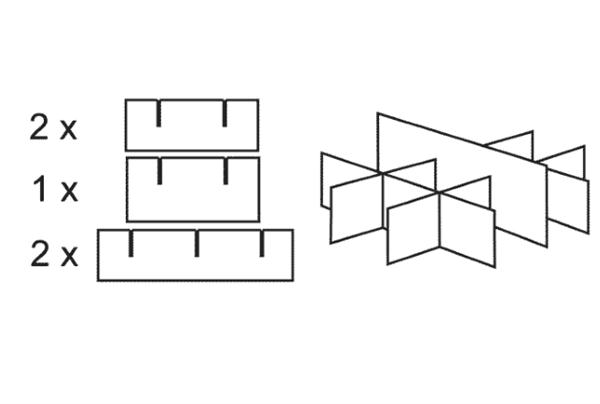
Liners, tubes, pads, build-ups, dividers, partitions, and other inner packing pieces can be made in an infinite variety of ways to separate or cushion products, to strengthen the box or to prevent product movement by filling voids. They may be simple rectangles, or scored, slotted, scored and slotted, or die-cut shapes.
Many of the common interior forms have been given International Fibreboard Case Code numbers. The carrier classifications provide specifications for some pieces used in the packing of glassware and other fragile articles.
Pads are plain shapes of corrugated or solid fiberboard. They can be used to fill the space between the inner flaps of an RSC, to completely cover the bottom or top of a box, or to separate layers of product. Vertically, they can be used to separate products.
Tubes are scored rectangles, folded and sometimes joined with tape to form a multi-sided structure open at both ends. When used as sleeves for individual items such as glassware, adjacent shells provide double protection.
Partitions or dividers provide a separate cell for each item in a box. They are used primarily for glassware and other fragile articles.
Inner packing pieces, which are scored and folded, can take many shapes. Included in this group are built-up pads consisting of multiple pieces glued together. Inner packing pieces are used for cushioning, suspension and separation, and to fill voids. The suspension function holds the product away from the walls of the box to lessen the impact of drops or bumps. Completely filling the voids created by irregularly shaped products adds stacking strength to the box.
Nelson Container is built for businesses that need more than standard box sizes. We specialize in custom and specialty packaging of virtually any shape or size, including short production runs and multi-SKU orders with multiple box styles in a single shipment. Unlike large box manufacturers focused on full truckload volumes, Nelson is an ideal partner for smaller and mid-sized businesses with unique requirements and tighter timelines. As a family-owned company since day one, we prioritize responsiveness, flexibility, and hands-on service. Our triple-wall and multi-layer box options provide superior protection for high-value products such as technology, medical devices, and industrial equipment. Combined with faster lead times, Nelson delivers packaging solutions that adapt to your operation—not the other way around.
Custom and specialty box sizes in virtually any shape or dimension
Ideal for short runs, special requests, and smaller production volumes
Supports multi-SKU orders with multiple box styles in a single order
Triple-wall and reinforced options for high-value or sensitive products
Family-owned business offering responsive service and faster lead times
Please enable JavaScript for full website functionality